The Story
Jur Sital has no story in the Puranas. It is a folk festival of Mithila, the Maithili speaking land of north Bihar and the Terai of Nepal, and its timing comes from the Mithila solar calendar, which begins the year when the Sun enters Mesha (Aries). That calendar is still published today as the Maithili panchang of Kameshwar Singh Darbhanga Sanskrit University. Jur means cool, the feeling of relief after heat, and sital means cold. The day is kept at the start of the hottest season, and almost everything people do on it is about water: blessing each other with it, giving it away, pouring it on trees and keeping the kitchen fire out for a day.
Satuani: Sattu, Tikola and a Pot of Water
The first day is Satuani, or Satuan, on Mesha Sankranti itself. Across Bihar and eastern Uttar Pradesh this is the day of sattu, the flour of roasted gram and barley that people mix with water in the summer heat. In the morning the elders worship the gosaun, the family deity, and offer sattu, jaggery and tikola, the small sour green mangoes that have just appeared on the trees. Then the family eats the same: sattu with tikola chutney.
Satuani is a day of giving. In Darbhanga and across Mithila people buy new clay pots from the potter the evening before, fill them with water and give them away, along with sattu, tikola and jaggery in clay bowls, often to a priest or someone in need. In many courtyards a clay pot is tied near the tulsi plant, with a small hole so that water drips onto it every day through the hot months. Families say this water quenches the thirst of the ancestors.
In the evening the women cook the next day's food: kadhi with bari (gram flour dumplings) and rice, and in some homes kheer and puri. That food will not be eaten tonight. It is kept for Jur Sital, which is why the second day is also called the basia pavani, the festival of stale food.
The Blessing of Cool Water
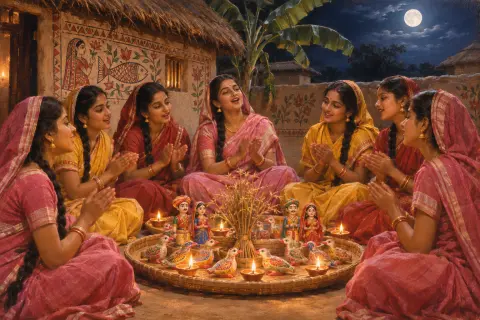
Jur Sital begins before sunrise. The night before, the elders store water in a pot or lota. In the early morning the eldest of the family, often a grandmother, pours a little of that water on the heads of the younger ones, one by one, and blesses them to stay cool, calm and well all year: jur sital raho. In some homes the water has first been offered to the family deity, with a few flower petals in it.
The meaning is simple. Summer in Mithila is fierce, with hot winds and dry fields. The blessing asks that the coming year be cool in every sense: a cool head, a calm temper, no fevers, no quarrels. Younger people touch the elders' feet, and in some families they pour water on the elders' feet in return as a mark of respect.
Among the Tharu people of the Nepal Terai, who call the festival Siruwa, people sprinkle water on each other in the same spirit, the elders blessing the young on the forehead and head.
A Day the Stove Rests
On Jur Sital the chulha, the kitchen stove, is not lit. The family eats what was cooked on Satuani evening: rice that has been kept in water overnight, the basi bhaat, with kadhi bari and curd. Drumstick (sahjan) is the favourite vegetable of the day. Part of this food is first offered to the gods, and a little is offered to the cold stove itself, thanking it for a year of meals.
Some explain the custom as rest for the women who cook every day of the year. Others say that in the start of summer the body needs cool, light food and the house needs a day without fire. Both readings fit a festival whose whole idea is cooling down.
Water for Trees, Paths and Ponds
After the people, the trees. On Jur Sital families pour water at the roots of the trees and plants around the house, especially the tulsi, the mango and the peepal, at the time of year when the heat is hardest on them. Maithili scholars often call it a festival of nature worship, because the same blessing of water given to children is given to plants.
Women sprinkle water over the courtyard and on the village paths to settle the dust. A saying in Darbhanga is that new brides do this so their brothers will not walk through dust when they come to visit. In many villages people also clean wells, ponds and other water sources on this day, ready for the dry months ahead.
Mud, Wrestling and the New Year
By late morning Jur Sital turns playful. Children and young people throw mud and water at each other, a game called kado or kichad khel, a little like Holi played with earth. In some villages there are dangal wrestling matches in the afternoon.
Fairs are held in many places, and in parts of Mithila they mark the jayanti of Raja Salhesh, a folk hero worshipped across Mithila and the Nepal Terai. In Janakpur and across Madhesh in Nepal, the day is kept as the Maithili New Year with cultural programmes and Maithili songs of the new year and of the month of Baishakh.
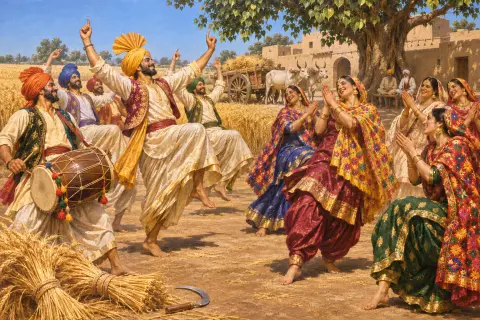
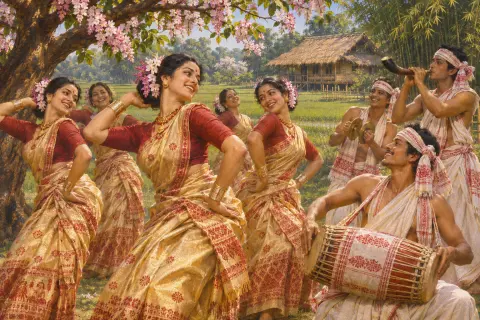
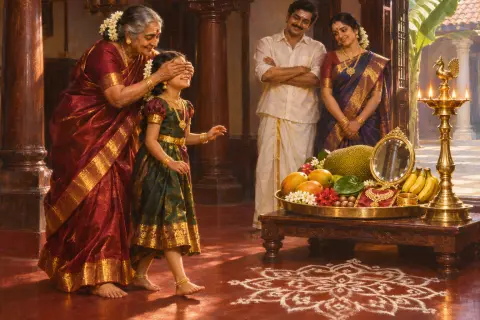
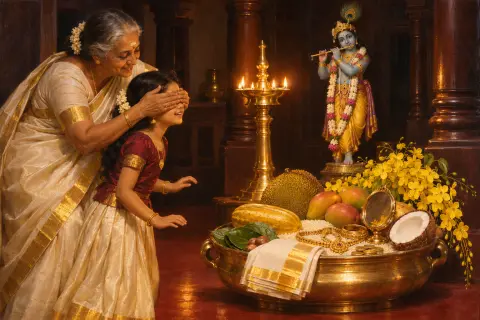
The same Mesha Sankranti is a new year or harvest day in many other parts of the subcontinent: Baisakhi in Punjab, Vishu in Kerala, and new year days in Bengal, Assam, Odisha, Tamil Nadu and Nepal. Mithila's way of keeping it, with cool water and a cold stove, is its own.
In the Gita (7.8) Krishna says, I am the taste in water. On Jur Sital, a grandmother pours a little water on a child's head, a family pours water at the root of a tree, and a clay pot drips all summer by the tulsi. None of it is grand, but each act treats water as something holy, given with love, and shared with everything that is thirsty.