The Story
The oldest Tamil writings that point to a year beginning in Chithirai are Sangam poems. In the Nedunalvadai, the poet Nakkirar describes the sun moving through the signs of the zodiac starting from Mesha (Aries), and a poem by Kudalur Kizhar in the Purananuru treats Chithirai as the first month of the year. These poems tell no legend. They show that Tamils have long counted the year by the sun, and Puthandu is kept because it is the first day of that solar year.
When the sun enters Mesha
The Tamil calendar is a solar calendar. Each month begins when the sun moves from one sign of the zodiac into the next, and the year begins when it enters Mesha, or Aries. That month is Chithirai, and its first day is Puthandu, which simply means new year. People also call it Varusha Pirappu, the birth of the year.
Because the date follows the sun and not the moon, it stays almost fixed on the modern calendar, usually on 14 April. The exact day depends on the moment the sun crosses into Mesha. Tamil almanacs start the year on that same day if the crossing happens in daylight, and on the next day if it happens after sunset.
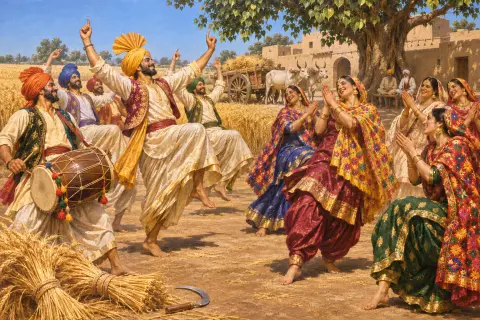
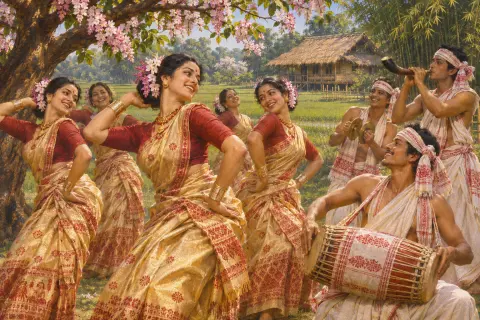
The same solar moment is a new year in many places. Kerala has Vishu, Punjab has Baisakhi, Bengal has Pohela Boishakh, Assam has Bohag Bihu, and Odisha has Pana Sankranti. Sri Lanka keeps the Sinhala and Tamil New Year together. Each region tells it differently, but they are all counting from the same turn of the sun.
An old way of counting the year
Other old Tamil works agree with the Sangam poems. The Silappadikaram lists the twelve signs of the zodiac in the same order, starting from Mesha, and the Tolkappiyam treats Chithirai as the start of the warm season.
Tamil years also carry names. They run in a cycle of sixty, from Prabhava to Akshaya, and then the cycle starts again. When Puthandu arrives, a new name begins, and the new panchangam (almanac) for that year is opened and read.
For a few years in the late 2000s the Tamil Nadu government moved the official Tamil New Year to the first day of Thai, the month of Pongal. Many people kept celebrating in Chithirai anyway, and the change was later reversed. Today the first of Chithirai is again the state's Tamil New Year, though some people still prefer to count the year from Thai.
Waking up to good things
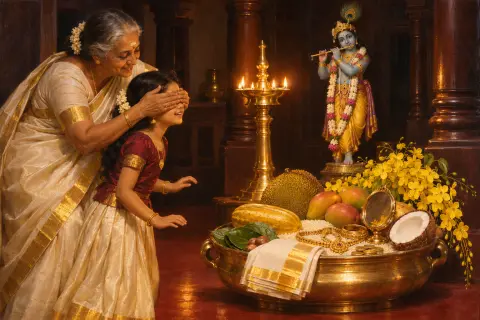
The day before, the house is cleaned from top to bottom. In the evening many families arrange a tray called kanni: the three fruits of Tamil tradition (mango, jackfruit and banana), betel leaves and areca nut, flowers, coins or money, gold or silver jewellery, and a mirror. In the Kongu region this is called Chithirai kani.
The tray is set up so that it is the very first thing the family sees on new year morning. In many homes one person gets up first and leads the others to it with their eyes closed. The idea is simple and very human: begin the year by looking at plenty, beauty and your own face in a mirror, and hope the year looks the same.
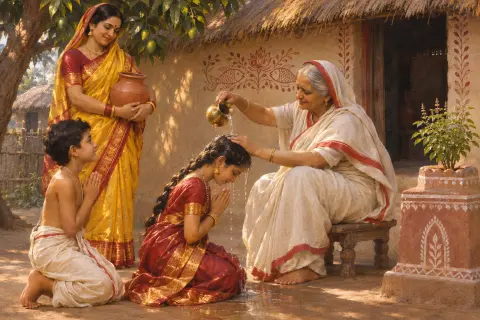
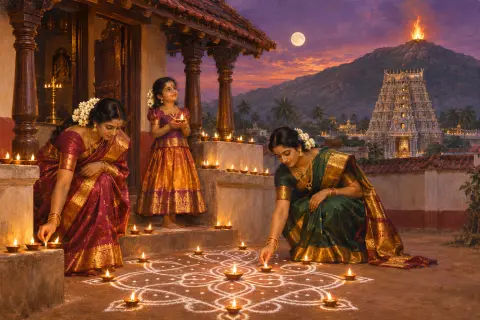
Then comes an oil bath, new clothes, and a kolam at the door drawn in rice flour, often bigger than on an ordinary day. The lamp in the prayer room is lit, the family prays together, and the younger ones touch the feet of their elders and receive their blessings.
A bowl with every taste
Lunch is a vegetarian feast, and its most talked about dish is the smallest one: mangai pachadi. It is made from raw mango, jaggery and neem flowers, with a little salt, chilli and tamarind in many homes. One spoonful is sour, sweet, bitter and hot together.
Families explain it plainly. The coming year will not be all sweet. There will be bitter days and sour ones, and some that sting. You eat all the tastes together at the start so that you accept them together when they come. Few festival foods carry their meaning so openly.
In many temples and homes the new panchangam is read aloud, with its forecasts for rain, harvests and the year ahead. Older people listen closely, younger people often less so, but it is a way of beginning the year together and in the open.
Temples, festivals and Tamils abroad
Temples are crowded on Puthandu. The month that starts with it is a busy one: Madurai's Meenakshi temple holds its great Chithirai festival during this month, and there are car festivals at temples such as Tiruvidaimarudur near Kumbakonam. Tiruchirappalli and Kanchipuram have their own festivals too.
In Sri Lanka the day is a public holiday shared by Tamils and Sinhalese. Sri Lankan Tamils keep customs such as kai vishesham, the first money of the year, when elders give children a small gift of cash. Village customs include the first ploughing of the year and games such as cart races and coconut contests.
In Malaysia and Singapore, Tamil families mark the day with temple visits, community events and the same kanni and pachadi at home. Wherever Tamil people live, Puthandu tends to look the same: a clean house, a kolam, the temple, and the family at one table.
Mangai pachadi teaches in one bowl what Krishna tells Arjuna in the Gita (2.14): heat and cold, pleasure and pain come and go, they have a beginning and an end, so bear them steadily. Puthandu does not pretend the year ahead will be easy. It starts the year by looking at good things, eating every taste together, and taking the elders' blessing, so that whatever comes, you meet it with a steady heart.